Most people think about the dentist when something goes wrong. A toothache, a chipped tooth, something that doesn’t feel quite right. But there’s one appointment that often gets pushed to the bottom of the list — the hygienist visit. Not because people don’t care, but because it doesn’t always feel urgent.
Until it does.
Gum disease is the leading cause of tooth loss in adults in the UK. It’s largely preventable. And in most cases, the single most effective thing you can do to stop it in its tracks is to see a dental hygienist regularly.
If you’ve been putting off booking, or you’re not sure what a hygienist appointment actually involves, this guide is for you. We’ll walk through everything — what happens, how often you should go, and why it matters far more than most people realise.
Quick answer: Professional teeth whitening is one of the fastest, most effective cosmetic treatments available. Most patients see results 4–8 shades lighter after a single course of treatment — with results that can last 1–2 years.
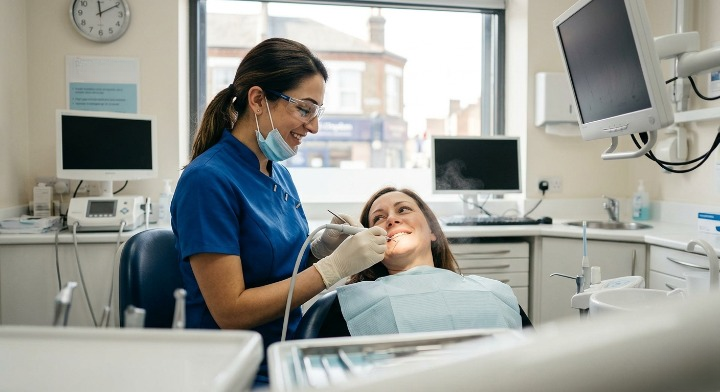
It’s a fair question. A lot of patients at our Croydon practice aren’t entirely sure what separates a hygienist appointment from a regular dental check-up. They’re related, but they’re not the same thing.
Your dentist looks at the overall health of your teeth, gums, bite, and jaw. They check for decay, look at X-rays, and identify problems that need treatment.
A dental hygienist focuses specifically on the health and cleanliness of your gums and teeth surfaces. Their job is preventative — stopping problems before they start, and treating early-stage gum disease before it becomes serious.
Scale and polish — This is the core part of the appointment. Using specialist instruments, your hygienist will carefully remove hardened tartar (also called calculus) and plaque deposits from around and between your teeth, and just below the gumline. No matter how well you brush, tartar can only be removed by a professional. It builds up gradually over time and brushing alone won’t shift it once it’s there.
Stain removal — Surface stains from tea, coffee, red wine, or smoking respond well to professional cleaning. After a scale and polish, teeth often look noticeably brighter — not because anything artificial has been done, but because the natural colour of the tooth is properly visible again.
Gum assessment — Your hygienist will check the health of your gum tissue, looking for signs of inflammation, bleeding, recession, or pocketing. These are all early indicators of gum disease.
Personalised oral hygiene advice — This is where patients often get the most value. A good hygienist won’t just clean your teeth — they’ll show you where you’re missing spots when you brush, recommend the right technique, and advise on whether flossing, interdental brushes, or a water flosser might work better for you.
Tartar is essentially hardened plaque. Plaque is the soft, sticky film that forms on your teeth throughout the day as bacteria combine with saliva and food particles. When you brush and floss regularly, you remove most of that plaque before it has a chance to harden.
But life gets in the way. Technique matters. And certain areas — particularly the backs of lower front teeth and the outer surfaces of upper molars — are easy to miss.
When plaque sits on the tooth surface for around 24 to 72 hours, it begins to mineralise. The calcium in your saliva essentially hardens it into a cement-like substance. That’s tartar. And once it’s there, it bonds to the tooth structure in a way that no toothbrush — however good — can remove.
Tartar is also porous and rough in texture, which means it acts like a magnet for more plaque. The longer it stays, the more it builds up. And because it often sits just at or below the gumline, it creates a perfect environment for the bacteria that cause gum disease to thrive.
This is why the hygienist visit isn’t optional if you care about keeping your teeth long-term.
If you’ve never been before — or it’s been a while — you might feel a little nervous. That’s completely normal. Most patients tell us afterwards that it was far more comfortable than they expected.
A quick assessment first. Your hygienist will take a look at your teeth and gums, check for any areas of concern, and may measure the depth of the gaps between your teeth and gums (called periodontal pockets). This is painless — it just involves a thin probe and takes a couple of minutes.
The scaling. Using either hand instruments or an ultrasonic scaler (or both), your hygienist will remove tartar and plaque from the tooth surfaces. The ultrasonic scaler vibrates at a high frequency and uses a fine water spray — it’s efficient and most patients find it comfortable. Some areas, particularly around the gumline, can feel a little sensitive, but it shouldn’t be painful. If at any point you feel uncomfortable, just raise your hand and the hygienist will adjust.
Polishing. Once the scaling is done, your teeth will be polished using a slightly gritty paste and a rotary brush or rubber cup. This removes surface stains and leaves your teeth feeling clean and smooth.
Advice and guidance. Before you leave, your hygienist will talk you through what they found and give you personalised tips for improving your home routine — whether that’s switching to a different technique, introducing interdental cleaning, or using a specific type of toothpaste.
Most appointments take between 30 and 60 minutes, depending on how much buildup there is and whether any additional treatment is needed.
This is one of the most common questions patients ask, and the honest answer is: it depends on you.
The standard recommendation for most adults with healthy gums is every six months — roughly in line with a regular dental check-up. But not everyone is the same.
Some people produce more tartar than others. Some are more prone to gum disease. Smokers, people with diabetes, and those with a history of periodontal problems generally benefit from more frequent visits — sometimes every three or four months.
If your gums are in excellent condition, have good oral hygiene habits at home, and have no history of gum problems, your dentist might suggest that once a year is sufficient. But this is rare. The reality is that for most adults, six months is about right.
The key thing to understand is that gum disease is often silent in its early stages. It doesn't always hurt. Many people have mild gum inflammation — called gingivitis — without knowing it. Gingivitis is completely reversible with the right treatment and care. But if it progresses to periodontitis (deeper gum disease), the damage to bone and tissue can be permanent.
Catching it early makes an enormous difference.
If you're based in Croydon and haven't had a hygiene appointment recently, it's worth booking a routine dental check-up alongside your hygiene visit. Both work together.
Sometimes the body gives you clear signals that your gums need attention. Look out for:
Bleeding gums — especially when brushing or flossing. This is often dismissed as "normal," but it isn't. Healthy gums don't bleed. Bleeding is an early sign of inflammation.
Persistent bad breath — If brushing and mouthwash aren't resolving it, bacteria below the gumline could be the cause.
Visible tartar buildup — particularly behind the lower front teeth. If you can see or feel rough deposits, it's definitely time.
Sensitive teeth — If your teeth feel sensitive to hot, cold, or sweet foods, this can sometimes be linked to receding gums or exposed root surfaces.
Gums that look red or puffy — Healthy gum tissue is pale pink and firm. Redness and swelling are signs of active inflammation.
Teeth that feel loose or have shifted — This is a later-stage sign and needs prompt attention. Don't ignore it.
Any one of these should prompt a call to the practice. Taken together, they suggest gum disease is already underway — and the sooner it's treated, the better.
Across the UK, gum disease is genuinely widespread. Research from the NHS and the British Society of Periodontology consistently shows that around half of adults have some degree of gum disease at any given time, and a significant proportion of those are unaware of it.
In Croydon and the surrounding areas — including South Croydon, Purley, Thornton Heath, Shirley, and Addiscombe — we see patients regularly who've been managing without professional hygiene appointments for years. It's not unusual. Life gets busy. NHS slots can be hard to come by. Hygiene appointments can feel like a luxury rather than a necessity.
But the cost of not going is usually much higher than the cost of going.
Early-stage gum disease is straightforward to treat. Advanced gum disease can require specialist periodontal treatment, and in the worst cases, leads to tooth loss — which then requires dental implants or other restorative work to replace what's been lost.
Prevention, as they say, is always better than cure.
Here's something a lot of patients don't realise: a professional hygiene clean can make your teeth look noticeably better — without any cosmetic treatment at all.
Surface stains from tea, coffee, red wine, and smoking can dull the appearance of teeth significantly over time. These aren't structural stains — they sit on the outer surface of the enamel and respond very well to professional polishing.
After a scale and polish, patients often comment that their teeth look whiter and brighter. This isn't a whitening treatment — it's simply that the natural colour of the tooth is visible again once the staining is removed.
If you're considering teeth whitening in Croydon, a hygiene clean beforehand is actually highly recommended. It creates a clean, even surface for the whitening gel to work on, leading to more consistent and longer-lasting results.
Similarly, if you're starting Invisalign treatment or any orthodontic work, your teeth and gums should be in the healthiest possible condition first. Moving teeth through unhealthy tissue increases the risk of complications.
This question comes up all the time — and it's worth addressing honestly.
For most people, a scale and polish is not painful. It can feel a little uncomfortable in areas where the gums are inflamed or where there's significant buildup, but discomfort and pain are different things.
If your gums bleed easily, feel tender when touched, or the tartar deposits are particularly heavy, your hygienist may work carefully across multiple areas to avoid any unnecessary sensitivity. Some patients find cold water from the ultrasonic scaler causes brief sensitivity — this settles almost immediately.
If you have a history of dental anxiety or particularly sensitive teeth, just let your hygienist know before the appointment starts. They will adjust their approach accordingly, can take breaks when needed, and will always check in with you throughout.
At iCare Dental Croydon, we take dental anxiety seriously. Our team is used to working with nervous patients and our approach is always calm, unhurried, and patient-led. You're always in control.
Good oral hygiene habits start early — and professional hygiene care isn’t just for adults.
Children and teenagers can benefit from hygienist appointments too, particularly if they’re prone to plaque buildup, wear braces or aligners, or are at higher risk of gum problems. Children’s dentistry in Croydon at iCare includes guidance on building healthy habits that genuinely last.
For younger patients especially, a hygienist visit can be incredibly useful simply as a chance to learn. Brushing technique matters enormously, and it’s something most of us have never been formally taught. A fifteen-minute conversation with a hygienist can change the way a child looks after their teeth for the rest of their life.
Yes. Standard hygiene appointments are designed for maintenance and prevention — keeping healthy teeth clean and catching early problems early.
Periodontal treatment goes further. If gum disease has already progressed — if there are deep pockets around the teeth, significant bone loss, or advanced infection — a more intensive course of treatment is needed. This typically involves a process called root surface debridement, where the hygienist or specialist cleans the root surfaces of the teeth below the gumline, removing bacteria and hardened deposits from areas that a standard clean can’t reach.
This type of treatment may require local anaesthetic and is usually carried out over multiple appointments. At iCare Dental Croydon, we offer periodontal treatment for patients with more advanced gum disease, carried out with the same care and attention as all our treatments.
If you’re not sure what stage you’re at, a consultation is the best starting point. We’ll assess your gum health thoroughly and be honest with you about what’s needed.
Because you keep your custom-made trays, refreshing your whitening at home in the future is very straightforward — and much more affordable than starting from scratch.
Professional teeth whitening, carried out correctly by a qualified dentist, is a well-established and safe treatment. The active ingredients — hydrogen peroxide or carbamide peroxide — have been used in clinical dentistry for decades.
Some patients do experience temporary sensitivity during or after treatment, particularly to hot or cold. This is completely normal and usually resolves within a day or two. If you already have sensitive teeth, your dentist may recommend a lower concentration gel or a desensitising treatment alongside whitening.
Important: If you have crowns, veneers, bridges or white fillings on visible teeth, discuss this with your dentist before whitening. Whitening gel does not change the colour of restorations — so existing dental work may become more noticeable if your natural teeth whiten around them.
iCare Dental Croydon is centrally located and regularly sees patients from across the local area — including South Croydon, East Croydon, Purley, Thornton Heath, Addiscombe, Shirley, Norwood, Selsdon, and Waddon. If you’ve been searching for “teeth whitening near me” in the CR0 postcode or surrounding areas, our practice is convenient to reach with flexible appointment times.
We welcome both new and existing patients for whitening consultations — you don’t need to be an existing patient to book.
Whitening is one of the most cost-effective cosmetic dental treatments available — but it’s not always the right solution on its own. If your main concern is colour and brightness, whitening is the ideal starting point. However, if you’re also looking to address chips, gaps, or shape, you might benefit from dental veneers or a full smile makeover.
If alignment is also a concern, we offer Invisalign clear braces in Croydon — and many patients choose to whiten after completing their Invisalign treatment for a complete smile transformation. Explore our full cosmetic dentistry range to see what’s possible.
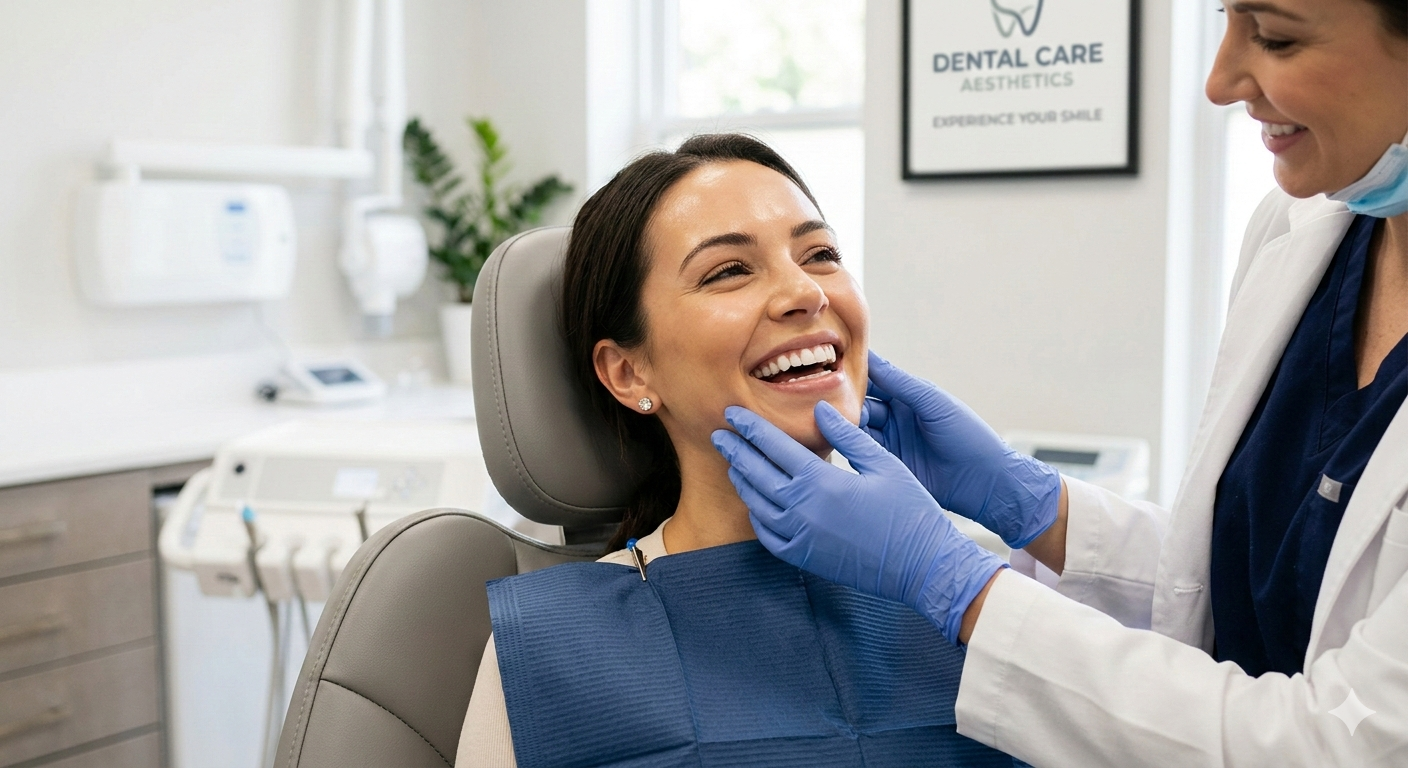
No, they are two different appointments with different purposes. A dentist check-up involves examining your teeth, gums, and oral tissues for signs of decay, disease, or other issues, and may include X-rays. A hygienist appointment is focused on cleaning your teeth and educating you on how to look after them at home. Many people benefit from having both regularly, and in a lot of practices the two appointments are scheduled together on the same day.
For most people, the appointment is perfectly comfortable. If your gums are inflamed or it has been a long time since your last clean, you may experience some sensitivity during the scaling, but this is usually mild and temporary. If you are anxious about the appointment, let the hygienist know beforehand — they are used to working with nervous patients and can take a gentler approach or take regular breaks if needed.
In most cases, yes. Current rules in the UK allow dental hygienists to see patients directly without a referral from a dentist, as long as the patient is aware that they are not receiving a full dental examination. However, it is always recommended to also have regular check-ups with a dentist so that nothing is missed
A dentist will diagnose gum disease and decide on a treatment plan, while the hygienist is typically the person who carries out the treatment. For mild gum disease, this might involve a thorough clean and advice on improving your home routine. For more advanced gum disease, the hygienist might carry out a deeper procedure called root surface debridement, which cleans beneath the gumline. The two professionals work closely together.
The basics make a big difference. Brush twice a day with a fluoride toothpaste, and clean between your teeth daily using floss or interdental brushes. Reduce sugary drinks and snacks, avoid smoking, and drink plenty of water throughout the day. Your hygienist will give you specific advice based on your own mouth, so try to put their recommendations into practice between visits — it means each appointment starts from a better baseline.
iCare Dental Croydon is centrally located and regularly sees patients from across the local area — including South Croydon, East Croydon, Purley, Thornton Heath, Addiscombe, Shirley, Norwood, Selsdon, and Waddon. If you’ve been searching for “teeth whitening near me” in the CR0 postcode or surrounding areas, our practice is convenient to reach with flexible appointment times.
We welcome both new and existing patients for whitening consultations — you don’t need to be an existing patient to book.
Same-week appointments available. Serving Croydon, CR0 & surrounding areas.
We are committed ourselves to provide the highest quality in our dental services and continuously update our knowledge and equipment for our patients benefit and convenience. Our Dentists are well trained to ensure that you are looked after in a warm, modern, and friendly environment.
Copyright © 2026 iCare Dental Ltd.Reserved. Designed by Walden Waves
WhatsApp us
iCare Dental has made things easier for you! You can stop asking people, “Which dental clinic is near me?”