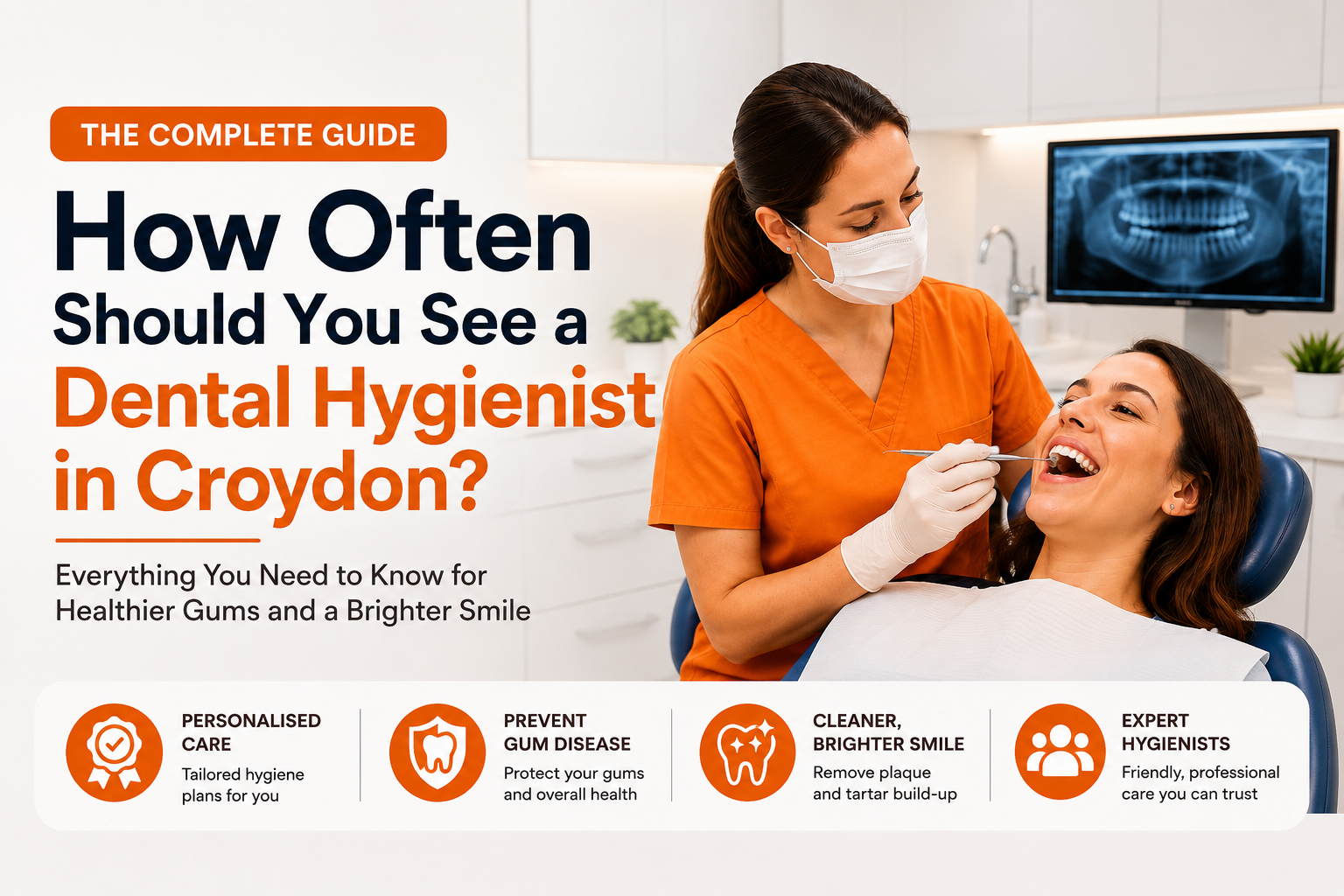
There’s a reason this question comes up so often: most people were told “every six months” at some point in childhood and have never really questioned it since. But that interval isn’t a fixed rule — Professional dental hygiene treatment helps remove plaque and tartar build-up and can support healthy gums and teeth. However, it cannot guarantee the prevention of gum disease or tooth decay. Here’s the iCare dental croydon have full picture, not just the headline number.
Brushing and flossing remove the soft plaque that forms daily on your teeth. What they can’t remove is tartar — plaque that’s hardened onto the tooth surface, usually below the gumline where a toothbrush physically can’t reach. Once tartar forms, only a dental hygiene expert with the right instruments can remove it safely.
Maintaining good oral health also involves daily brushing with fluoride toothpaste, cleaning between the teeth, and attending dental assessments as recommended by your dentist or hygienist.
This matters because tartar buildup is the primary driver of gum disease, and gum disease is far more common than most people assume. Research from the Oral Health Foundation suggests a significant majority of UK adults will experience some form of gum problem during their lifetime, ranging from mild gingivitis (inflamed, bleeding gums) through to periodontitis, the more advanced form that can permanently damage the bone and tissue holding your teeth in place. The UK government’s own Delivering Better Oral Health guidance — the official clinical toolkit used across NHS and private dentistry — treats periodontal disease prevention as one of the central goals of routine hygiene care, precisely because gingivitis is reversible if caught early, while periodontitis often isn’t.
The uncomfortable truth is that gum disease in its early stages rarely hurts. Bleeding when you brush is usually the first and only sign — which is exactly why so many people ignore it for years before anything feels seriously wrong.
For adults with generally healthy gums, no significant risk factors, and a solid daily brushing routine, six months remains a sensible interval. It’s roughly the timeframe in which tartar reliably builds up to a level that brushing alone can no longer manage, and it gives your hygienist a regular checkpoint to catch any early changes in your gum health before they become a bigger problem.
Some people may need dental hygiene appointments more frequently than others, depending on their individual oral-health needs. Factors that may influence the recommended interval include:
Gum health: People with signs of gum disease may require closer monitoring and personalised professional care.
Plaque and tartar build-up: The amount of plaque and calculus that accumulates can influence the cleaning and maintenance advice provided.
Smoking: Smoking can affect gum health and may influence the type of preventive care recommended.
Orthodontic treatment: Braces and other orthodontic appliances can make cleaning certain areas more challenging.
Medical history: Certain health conditions and medications may affect oral health and the need for professional monitoring.
Oral hygiene routine: Your brushing, interdental cleaning and other daily habits can influence your ongoing dental hygiene needs.
It’s worth being direct about this rather than vague. Skipping hygiene appointments doesn’t usually cause an immediate problem — which is exactly why it’s easy to keep skipping them. The progression tends to look like this:
Tartar builds up gradually below the gumline → gums become inflamed and start bleeding when you brush (gingivitis) → if untreated, the inflammation spreads deeper and starts breaking down the bone and tissue anchoring your teeth (periodontitis) → teeth can become loose, gums recede, and in advanced cases, tooth loss follows.
The Cochrane Collaboration, an internationally respected source of evidence-based medical research, has specifically reviewed the role of routine scale and polish treatment in periodontal health — reinforcing that professional cleaning plays a measurable role in maintaining gum health over time, alongside good daily brushing.
The financial angle is worth mentioning too, bluntly. A routine hygiene appointment costs a fraction of what periodontal treatment costs once gum disease has progressed — and periodontal treatment can’t always fully reverse damage that’s already occurred, whereas prevention can.
The honest answer is that your hygienist should tell you, based on an actual assessment of your gum health rather than a generic rule. At your appointment, ask directly: “Based on my gums specifically, what interval would you recommend?” A good hygienist will give you a straight answer tailored to what they’re actually seeing, not a default response.
If you’re in Croydon and it’s been longer than you’d like to admit since your last hygiene visit, iCare Dental’s dental hygiene appointments start from £65, include a full gum health assessment, and don’t require a referral from a dentist. If you’re noticing early signs of gum disease specifically, our periodontal treatment page covers what deeper treatment involves if a standard clean isn’t enough on its own.
The ideal frequency for visiting a dental hygienist in Croydon depends on your oral health, lifestyle, and risk factors. While many people benefit from hygiene appointments every six months, some may need more frequent care to prevent gum disease and maintain a healthy smile. At iCare Dental Croydon, our experienced team provides personalised dental hygiene treatment, including scale and polish and Airflow cleaning, tailored to your needs. Book your dental hygiene appointment today and keep your smile healthy with expert preventive care.
For most people, going slightly longer than recommended isn’t an immediate disaster, but the longer the gap, the more tartar accumulates and the harder it becomes to reverse early gum inflammation. If it’s been over a year, it’s worth booking an assessment rather than assuming everything’s fine.
Yes, at most private practices including iCare Dental, no dentist referral is required to book a hygiene appointment directly.
Yes — smoking reduces gum blood flow, hides early bleeding (a key warning sign), and speeds up plaque and tartar buildup, which is why smokers are typically advised to attend more frequently.
Yes, that’s part of a proper hygiene assessment — checking for gum pocket depth, bleeding, and inflammation, not just cleaning your teeth.
Gingivitis (early-stage, inflamed gums) is generally reversible with proper cleaning and improved home care. Periodontitis (advanced gum disease affecting bone and tissue) is usually manageable but not fully reversible, which is why early intervention matters.
At iCare Dental Croydon, Basic Scale and Polish is £65 instead of £85, Deluxe Scale and Polish with Stain Removal is £95 instead of £120, and Children’s Teeth Polish / Stain Removal is £55. Your dentist or hygienist can advise which treatment is appropriate for your needs.
Regular hygiene appointments help keep your teeth clean, gums healthy, and smile looking its best. Our experienced dental hygienists provide gentle, professional care tailored to your oral health needs.
WhatsApp us
iCare Dental has made things easier for you! You can stop asking people, “Which dental clinic is near me?”