After a tooth extraction, eat soft, cool or lukewarm foods that need little or no chewing, such as yoghurt, scrambled eggs, mashed potato, porridge and smooth soup. Stick to these for the first 24 to 48 hours, then add soft pasta and noodles from day 2 or 3. Most people return to normal food within 7 to 10 days.
Below you will find a day-by-day eating plan, 50 soft foods with a note on each, meal ideas and the foods to avoid, written by the team at iCare Dental in Royal Docks.
Why Soft Foods Matter After a Tooth Extraction
After an extraction, a blood clot forms in the socket to protect the bone and nerve while the gum heals. Hard, crunchy, sticky or very hot foods can dislodge the clot and cause dry socket, irritate the gum and slow healing.
That is why dentists recommend soft foods for the first few days. If pain gets worse instead of better, book an emergency dental appointment.
What to Eat After a Tooth Extraction, Day by Day
First 24 Hours
Stick to cool or lukewarm foods that need no chewing, such as yoghurt, cool smooth soup, mashed potato, custard and smoothies eaten with a spoon.
Do not use a straw, rinse hard, smoke or drink alcohol.
Days 2 to 3
Add soft, warm (not hot) foods such as scrambled eggs, porridge, soaked Weetabix, soft pasta and well-cooked noodles.
Swelling often peaks around day 2 or 3, so keep chewing on the other side.
Days 4 to 7
Move on to soft meals with a little texture, such as fish pie, shepherd’s pie, risotto, soft lasagne and steamed vegetables.
Keep avoiding crunchy, sharp and spicy food.
After 7 to 10 Days
Most people can return to their normal diet. Bring back firmer foods gradually, and wait longer after a surgical or wisdom tooth extraction if your dentist advises.
50 Soft Foods to Eat After Tooth Extraction
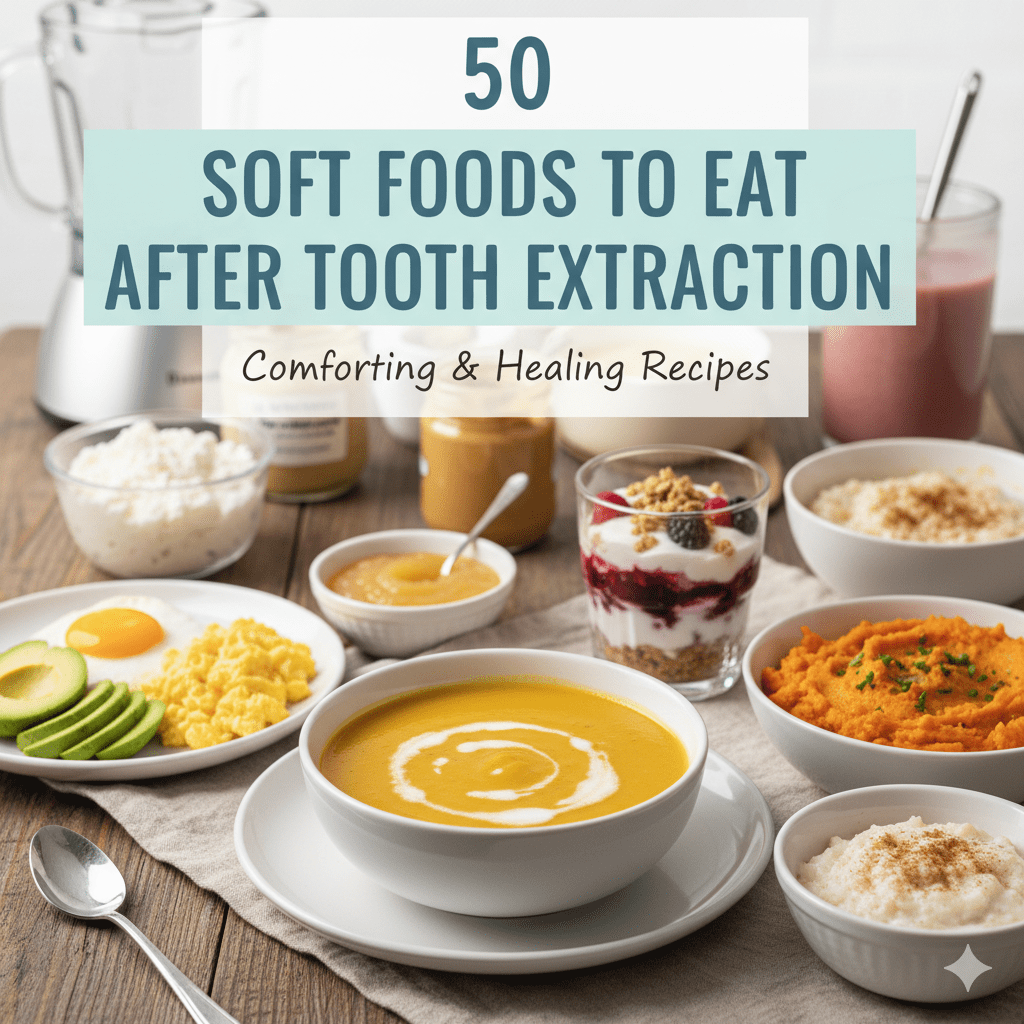
Here are 50 soft foods to eat after tooth extraction or dental surgery, grouped by type. Start with the first groups in the first 24 to 48 hours and add pasta and noodles from day 2 or 3.
Dairy and Eggs
- Greek yoghurt – cool, smooth and high in protein
- Cottage cheese – soft protein, no chewing
- Soft scrambled eggs – ideal from day 2
- Egg mayonnaise, mashed well – soft and filling
- Protein shakes – drink from a cup, not a straw
- Milkshakes – no straw, no pieces
- Ricotta – mild and creamy
- Silken tofu – soft plant protein
- Hummus – smooth and filling
- Cream cheese – on very soft bread from day 4
Soups and Broths
- Chicken broth – serve lukewarm
- Vegetable broth – gentle and hydrating
- Smooth tomato soup – from day 2, not hot
- Pumpkin soup – smooth and filling
- Cream of mushroom soup – blended smooth
Mashed Vegetables
- Mashed potato – the classic first meal
- Mashed sweet potato – soft and nutritious
- Mashed carrots – cooked until very soft
- Mashed cauliflower – light and smooth
- Mushy peas – soft and familiar
Soft Fruit and Smoothies
- Apple purée – smooth and cool
- Mashed banana – no chewing needed
- Smoothies – seed-free, eaten with a spoon
- Tinned peaches – soft, chopped small
- Mashed avocado – healthy fats
Porridge, Grains and Carbs
- Porridge – well cooked and cooled
- Weetabix – soaked in milk until soft
- Polenta – smooth and warm
- Soft pancakes – no seeds or nuts
- Rice pudding – soft and comforting
Pasta and Noodles
- Macaroni cheese – soft and filling
- Soft lasagne – from day 2 or 3
- Buttered noodles – well cooked, lukewarm
- Soft ramen noodles – lukewarm broth, no chilli
- Rice noodles – very soft
Puddings and Treats
- Custard – smooth and soothing
- Jelly – cool and easy to swallow
- Ice cream – plain, no nuts or pieces
- Sorbet – cool, no seeds
- Chocolate mousse – soft treat
Soft Snacks
- Fromage frais – easy snack pot
- Smooth peanut butter – on soft bread from day 4
- Mild guacamole – no chilli
- Tzatziki or creamy dips – mild
- Soft baked apples – no skin
Other Gentle Options
- Bone broth – nutrient-rich, lukewarm
- Mild lentil dhal – blended smooth
- Mashed baked beans – soft and filling
- Steamed courgette – mashed
- Butternut squash purée – smooth
Soft Meal Ideas: Breakfast, Lunch and Dinner
Breakfast
Try porridge or soaked Weetabix, Greek yoghurt with mashed banana, or soft scrambled eggs.
Lunch
Choose smooth soup, hummus with soft pitta from day 4, or macaroni cheese.
Dinner
Good options include fish pie, shepherd’s pie, soft risotto, mild lentil dhal, or mashed potato with cheese.
Filling Choices
Eggs, Greek yoghurt, porridge with smooth nut butter and lentil soup can help keep you fuller for longer.
Can I Eat Noodles After a Tooth Extraction?
Yes, after the first 24 hours, as long as the noodles are soft, well cooked and lukewarm.
Plain buttered noodles, soft ramen, rice noodles and small pasta are all suitable. Avoid spicy sauces, crunchy toppings and very hot broth, and chew on the other side of your mouth.
If chewing hurts, wait another day or two.
Can I Eat a Pot Noodle or Super Noodles After a Tooth Extraction?
Yes, from day 2, once the noodles are soft and have cooled to lukewarm.
Pot Noodles and Super Noodles can be salty and spicy, so skip any hot sauce sachet, let them cool fully and eat slowly on the other side of your mouth.
For the first 24 hours, stick to softer foods such as yoghurt or mashed potato.
Can I Eat Ramen After a Tooth Extraction?
Yes, from about 24 to 48 hours, if the noodles are soft and the broth is lukewarm.
Leave out chilli oil, crispy onions and crunchy vegetables until the socket has healed.
Can I Eat Lasagne After a Tooth Extraction?
Yes, usually from day 2 or 3, if the lasagne is soft, lukewarm and easy to chew.
Homemade lasagne with tender pasta, a smooth cheese sauce and finely minced meat or vegetables works well.
Avoid crispy edges and spicy sauce, chew on the other side, and go back to softer foods if it feels uncomfortable.
Foods and Drinks to Avoid After a Tooth Extraction
For the first week, avoid anything hard, sharp, sticky, spicy or very hot:
- Crisps, nuts, seeds and popcorn – sharp pieces can lodge in the socket.
- Crusty bread, toast and chewy sweets.
- Spicy or acidic food, such as curry, chilli and citrus.
- Very hot food and drinks – let tea, coffee and soup cool.
- Alcohol and fizzy drinks – they can slow healing.
- Straws – the suction can dislodge the blood clot.
Drink plenty of water, sipped from a glass.
Eating After Wisdom Tooth Removal
Wisdom tooth removal is often a surgical extraction, so you may need soft foods for longer, usually about a week.
Follow the same day-by-day plan, open your mouth gently, and avoid small grains and seeds until the sockets settle.
When Can I Eat Normally Again?
Most people can return to normal meals within 7 to 10 days, depending on how complex the extraction was.
Bring back firmer foods one at a time, chew on the other side at first, and follow your dentist’s personal aftercare advice.
When to Call Your Dentist
Contact your dentist if pain gets worse after day 3, bleeding does not stop with gentle pressure, you notice a bad taste or smell, or swelling increases after three days.
At iCare Dental in Royal Docks, E16, you can book an emergency dental appointment.
Frequently Asked Questions
Can I eat noodles after a tooth extraction?
Yes, after the first 24 hours, as long as the noodles are soft, well cooked and lukewarm. Let Pot Noodles and instant noodles cool first, skip spicy sauce sachets, and chew on the other side of your mouth.
When can I eat normally after a tooth extraction?
Most people return to their usual diet within 7 to 10 days. After a surgical or wisdom tooth extraction it can take longer. Add firmer foods gradually and stop if chewing hurts.
Can I eat lasagne after a tooth extraction?
Usually from day 2 or 3, if it is soft and lukewarm. Avoid crispy edges and spicy sauce, and chew away from the extraction site.
When can I eat crisps after a tooth extraction?
Wait at least a week. Sharp crisp fragments can lodge in the socket and disturb the blood clot.
Why is day 3 the worst after a tooth extraction?
Swelling and soreness often peak around 48 to 72 hours and then ease. If pain gets worse after day 3, or you notice a bad taste, contact your dentist, as this can be a sign of dry socket.
What can I make for dinner after a tooth extraction?
Try shepherd’s pie, fish pie with a mashed potato topping, soft risotto, macaroni cheese, lentil soup or soft scrambled eggs. Serve everything lukewarm for the first few days.
What are the most filling soft foods?
Foods with protein and healthy fats keep you fuller: scrambled eggs, Greek yoghurt, porridge with smooth nut butter, mashed potato with cheese, hummus and lentil soup.
Can I eat Weetabix after a tooth extraction?
Yes. Soak it in milk until it is completely soft and let it cool. It is a good option from day 1 or 2.
Need Help After an Extraction?
Recovering from a tooth extraction does not mean giving up flavour or nutrition. With these 50 soft foods and the day-by-day plan above, you can eat well while your mouth heals.
If you have unusual pain, swelling or bleeding, contact the iCare Dental team at Gateway Tower, Royal Docks, E16.