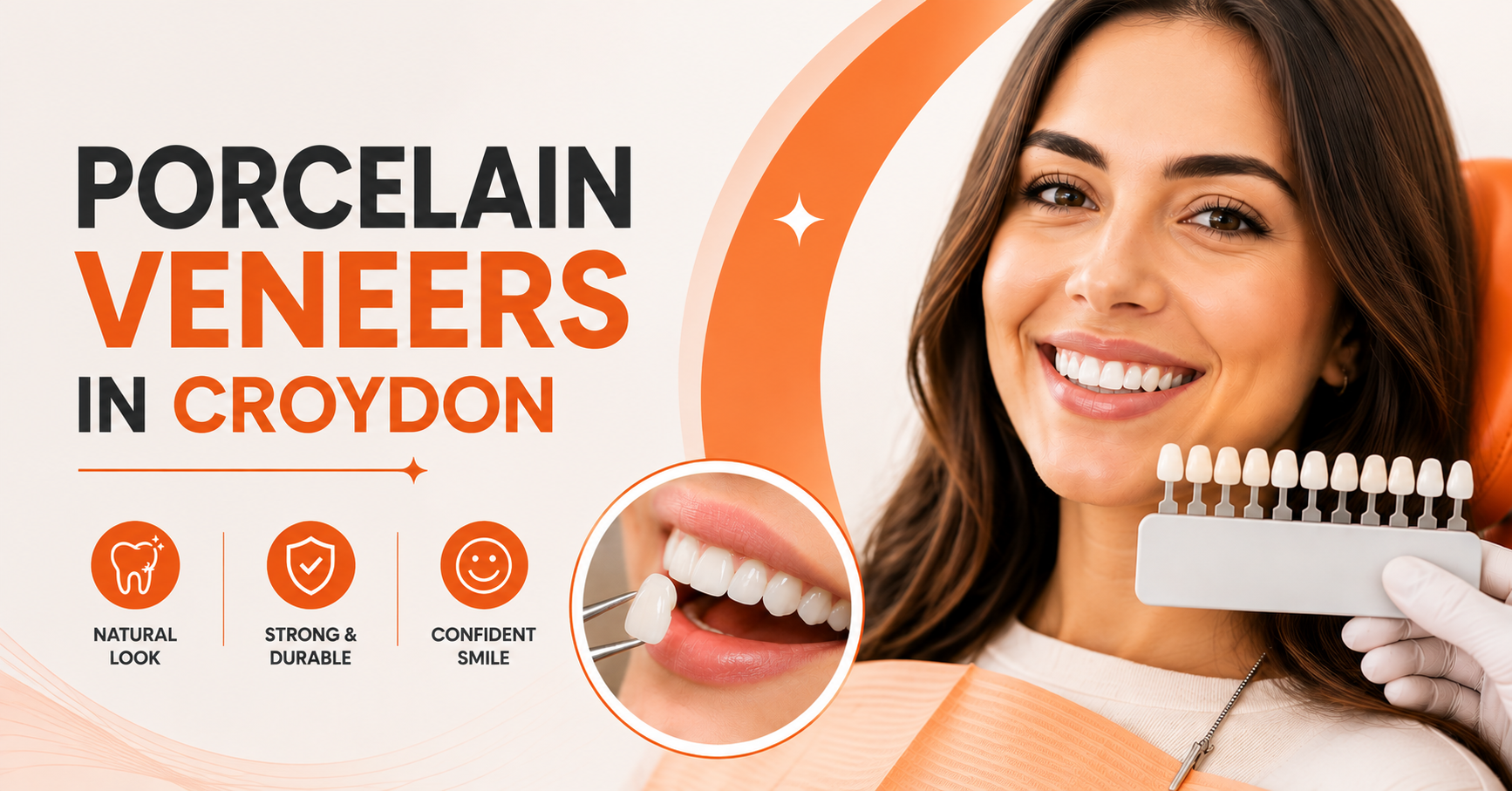
If you’re considering porcelain veneers in Croydon, you may want to know what the treatment involves, how much it costs, whether it is suitable for your teeth, and how to choose the right dentist. Porcelain veneers can be used to improve the appearance of selected teeth affected by discolouration, chips, worn edges or changes in shape. Because veneer treatment can involve removing some tooth structure, a proper dental assessment is important before deciding whether it is the right option for you.
This guide explains how Porcelain Veneers in Croydon work, what the treatment process may involve, what can affect the cost, how to care for veneers and what to consider when choosing a dentist in Croydon.
What is Porcelain Veneers?
Porcelain veneers are thin, custom-made restorations bonded to the front surface of a tooth. They can be used to improve the appearance of selected teeth by changing their colour, shape or proportions and by disguising certain chips or other cosmetic concerns. The amount of tooth preparation varies by case, and some veneer techniques may require little or no preparation.
Because veneers are a dental treatment rather than simply a cosmetic accessory, your dentist should assess your teeth, gums, bite and overall oral health before recommending them.
What Are Porcelain Veneers and How Do They Work?
Porcelain veneers are individually made to fit the front surface of a tooth. They can be used to improve the appearance of teeth affected by discolouration, chips, worn edges, minor shape irregularities and some gaps. Before treatment, your dentist should assess your oral health and discuss your goals, the likely result, alternatives, potential risks and the expected cost. Where appropriate, photographs, digital scans or other records may be used to plan the treatment.
If tooth preparation is required, the dentist removes an appropriate amount of tooth structure to create space for the veneer and achieve a suitable fit. iCare dental Croydon guidance notes that some veneers involve removing a small amount from the front of the tooth, while not all veneers require the same level of preparation. The veneer is then manufactured to the agreed design and fitted and bonded to the tooth. The exact number of appointments and whether temporary restorations are needed will depend on your treatment plan.
Are Porcelain Veneers Right for Everyone?
No. Porcelain veneers are not suitable for every patient, and a consultation is essential before treatment. Your dentist may need to address oral-health problems before considering veneers. Depending on your individual circumstances, factors such as tooth decay, gum disease, insufficient healthy tooth structure, significant tooth wear, an unsuitable bite or teeth grinding may affect whether veneers are appropriate.
A responsible cosmetic dentistry consultation should consider the long-term health of your teeth rather than focusing only on the appearance you want to achieve. In some cases, alternatives such as professional teeth whitening, composite bonding or orthodontic treatment may be more appropriate or less invasive. Your dentist should explain the available options so you can make an informed decision.
How Much Do Porcelain Veneers Cost in Croydon?
The cost of porcelain veneers in Croydon depends on factors such as the number of teeth being treated, the complexity of the case, the material and laboratory work involved, and whether any preparatory dental treatment is required. If iCare Dental has a current published veneer price, use the verified figure here: Porcelain veneers Start from £600.
The final price should be confirmed following an assessment and should clearly explain what is included. Depending on the treatment plan, this may include consultation, records or scans, preparation, temporary restorations where required, laboratory-made veneers, fitting, bonding and follow-up care.
When comparing porcelain veneers cost in Croydon, do not compare the headline price alone. Ask whether the quoted price includes the full treatment process and whether any additional dental work is required before veneers can be placed.
What Happens During Porcelain Veneer Treatment?
The exact process varies from patient to patient, but veneer treatment may involve several stages.
- Consultation and Assessment
- Your dentist examines your teeth and gums, assesses your bite and discusses your cosmetic goals. They may take photographs, scans, impressions or other records where appropriate.
- Treatment Planning
- Your dentist discusses the proposed tooth shape, colour, number of veneers, preparation requirements and expected outcome. If a digital smile preview or similar planning tool is available, ask how it will be used and what it can and cannot show.
- Tooth Preparation
- If preparation is required, the dentist carefully removes an appropriate amount of tooth structure to create the space needed for the restoration. The amount varies by case and should be kept as conservative as clinically appropriate.
- 4. Laboratory Fabrication
- Your final porcelain veneers are made to the agreed specification. The exact laboratory process and appointment schedule depend on the case and the practice’s workflow.
- Fitting and Bonding
- Before the veneers are permanently bonded, your dentist checks their fit, appearance, contacts and bite. Once the planned result is accepted and the teeth are ready, the veneers are bonded in place.
- Review and Aftercare
- Your dentist may arrange a review to check your bite, comfort, gum response and the condition of the restorations. You should also continue with routine dental examinations and professional hygiene care as advised.
How Long Do Porcelain Veneers Last?
Porcelain veneers do not last forever and may eventually need repair or replacement. Their longevity varies according to the material, preparation and bonding, bite, oral hygiene, diet, tooth grinding or clenching, trauma and ongoing dental care.
Patient information from Leeds Teaching Hospitals states that crowns and veneers should normally last around 8–10 years, although individual restorations can last longer with appropriate care. Your dentist can give you more specific advice based on your teeth and treatment plan.
Do not treat any quoted lifespan as a guarantee. Regular dental reviews and good oral hygiene can help identify problems early and protect both the veneers and the natural teeth underneath.
How Do You Look After Porcelain Veneers?
Looking after porcelain veneers involves maintaining the health of the teeth and gums around them.
- Brush twice a day with fluoride toothpaste.
- Clean between your teeth every day using floss or interdental cleaning aids recommended by your dental team.
- Attend regular dental check-ups and hygiene appointments.
- Avoid using your teeth to bite hard objects such as pen lids or packaging.
- If you grind or clench your teeth, ask your dentist whether a custom night guard is appropriate.
- Contact your dentist if a veneer chips, loosens, feels uncomfortable or changes in appearance.
Can Porcelain Veneers Stain?
Porcelain is generally resistant to staining, but the natural teeth around veneers can still change colour over time. Coffee, tea, red wine, smoking and other lifestyle factors can affect natural tooth colour and may make differences more noticeable.
If you are considering veneers because of tooth colour, discuss whitening before veneer shade selection. Existing porcelain veneers do not whiten in the same way as natural teeth, so treatment planning should consider the final shade from the beginning.
Can Veneers Be Removed or Reversed?
This depends on how the veneers were planned and whether tooth preparation was carried out. Where natural tooth structure has been removed, conventional porcelain veneer treatment is generally considered irreversible because the tooth cannot simply return to its original state.
For this reason, it is important to understand the benefits, limitations, risks, alternatives and long-term maintenance requirements before treatment.
What Should You Look for in a Porcelain Veneers Dentist in Croydon?
When searching for a porcelain veneers dentist in Croydon, look for a registered dental professional who provides clear information about the treatment, explains alternatives and carries out an appropriate assessment before recommending veneers.
- Check the dentist’s GDC registration and professional qualifications.
- Check that the dental practice is appropriately registered with the CQC where required.
- Ask who will carry out the consultation, preparation and fitting.
- Ask to see genuine examples of the dentist’s own work where appropriate and with proper patient permissions.
- Ask what is included in the treatment price.
- Ask about preparation, maintenance, possible complications and replacement.
- Ask whether less invasive alternatives could achieve your goals.
- Make sure you have enough time to consider the treatment rather than feeling pressured to proceed.
The GDC states that dental advertising and information should be accurate, current, clear and supported by facts, and should not create unjustified expectations about treatment results. Patients should therefore be given balanced information that allows them to make an informed choice.
Porcelain Veneers vs Composite Bonding
Porcelain veneers and composite bonding can both be used to improve the appearance of teeth, but they are different treatments.
- Porcelain veneers are custom-made restorations, usually produced in a dental laboratory and bonded to the tooth.
- Composite bonding uses tooth-coloured composite material applied directly to the tooth and shaped by the dentist.
- Composite bonding may be appropriate where a more conservative approach is preferred, depending on the case.
- Porcelain and composite restorations have different maintenance requirements, appearance characteristics and expected longevity.
Your dentist can help you compare the options based on your teeth, bite, goals and budget rather than choosing a treatment solely because it is cheaper.
Porcelain Veneers Near Me in Croydon: What Should I Check?
If you’re searching for porcelain veneers near you in Croydon, consider more than distance. Look at the dentist’s registration, the practice’s credentials, the treatment information provided, pricing transparency, appointment process and aftercare arrangements. A convenient location is useful, but the quality and suitability of the clinical assessment should remain the priority.
Conclusion
If you are considering porcelain veneers in Croydon, iCare Dental Croydon can assess your smile, discuss your goals and explain whether veneers or an alternative treatment may be appropriate. Use only verified clinic-specific claims here. The CQC Registered Clinic, current veneer pricing, genuine treatment photographs where permitted, and the actual consultation and aftercare process.
- Individual assessment before cosmetic treatment
- Discussion of treatment alternatives
- Transparent, written treatment information
- Clinician credentials and GDC registration displayed
- Clear information about maintenance and aftercare
Frequently asked questions
How much do porcelain veneers cost in Croydon?
The cost varies according to the number of veneers, complexity of treatment, laboratory work and any preparatory dentistry required. iCare Dental should publish only its current verified price, for example: Starting from £600, if applicable. A written treatment estimate should confirm what is included.
Are porcelain veneers painful?
Some patients experience sensitivity or discomfort after veneer preparation or fitting, but the experience varies. Local anaesthetic may be used where appropriate. Your dentist should explain what you can expect before treatment.
Can I have just one porcelain veneer?
Yes, a single veneer may be suitable for some patients, such as when one tooth has a cosmetic defect. The dentist will assess the surrounding teeth, colour, shape and bite to determine whether a single veneer is appropriate.
How many veneers do I need for a smile makeover?
There is no fixed number. The number depends on your smile, tooth display, symmetry, existing restorations and treatment goals. Your dentist should recommend the number needed for your individual case rather than using a standard number for everyone.
How long do porcelain veneers last?
Porcelain veneers are designed to enhance the appearance of your smile and provide a durable cosmetic solution. Longevity varies according to the tooth, bite, habits, oral hygiene and maintenance. The final appearance also varies from person to person depending on individual teeth, facial features and the treatment plan.
Can I whiten my teeth after getting porcelain veneers?
Whitening changes the colour of natural teeth but does not whiten existing porcelain veneers in the same way. If you are considering whitening and veneers, discuss the order and final shade with your dentist before treatment.
Can porcelain veneers fall off or chip?
Veneers can chip, fracture or become detached, particularly where they are exposed to heavy biting forces, grinding, trauma or other stresses. Contact your dentist if a veneer becomes loose or damaged.
Are porcelain veneers permanent?
Where tooth structure has been removed, conventional porcelain veneer treatment is generally irreversible. Veneers themselves may eventually need repair or replacement, so patients should understand the long-term commitment before proceeding.
Ready to Find Out If Porcelain Veneers Are Right for You?
If you’re considering porcelain veneers in Croydon, start with a consultation. Your dentist can assess your teeth, discuss your goals and provide a clear treatment plan and cost.