
If you’ve ever looked at a hygiene appointment price list and seen both “scale and polish” and “airflow cleaning” listed separately, it’s a reasonable question: aren’t these the same thing? They’re not — and understanding the difference is exactly the kind of insight a dental hygiene expert can offer to help you get more out of your next appointment.
What Is a Scale and Polish?
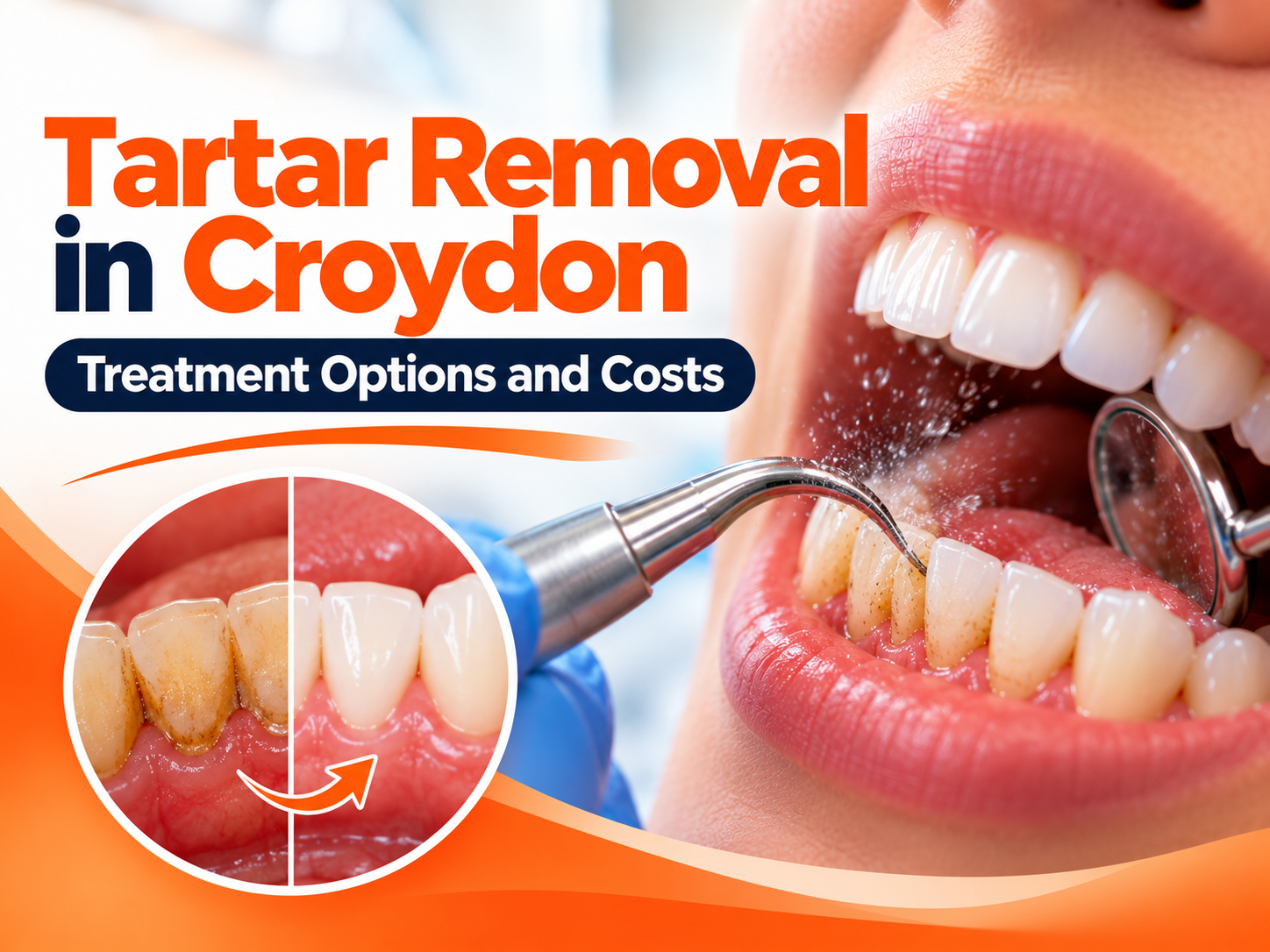
This is the traditional, foundational hygiene treatment. “Scaling” uses fine hand instruments or an ultrasonic scaler to physically remove tartar — hardened plaque that’s calcified onto the tooth surface, often just below the gumline. Tartar can’t be brushed away once it’s formed; it has to be mechanically removed by a trained professional.
“Polishing” follows scaling and uses a rotating rubber cup with a mildly abrasive paste to smooth the tooth surface and lift some surface staining. This is the part of the appointment most people remember — the slightly gritty paste and the buzzing sound.
Our Basic Scale and Polish treatment is available for £65 instead of £85. Your dentist or hygienist will assess your oral-health needs and recommend the appropriate cleaning treatment for you.
What Is Airflow Cleaning?
Air polishing can help remove selected surface stains and biofilm; scaling may still be required to remove calculus.
This method is particularly effective at removing:
- Surface staining from coffee, tea, red wine and tobacco
- Soft plaque and biofilm, particularly in awkward areas between teeth
- Staining around existing dental work like veneers, crowns, and orthodontic brackets
Because there’s no scraping or mechanical contact with the tooth surface, airflow cleaning tends to feel noticeably gentler, and it’s often specifically recommended for patients with sensitive teeth, dental implants, or extensive cosmetic work where traditional scaling instruments need to be used more cautiously.
The Key Difference, Simplified
Scale and polish removes hardened tartar through mechanical scraping. Airflow cleaning removes surface staining and soft plaque/biofilm through a precise air-water-powder jet. One deals with what’s calcified onto your teeth; the other deals with what’s sitting on the surface and in the gaps a polish alone doesn’t fully reach.
Do You Need Both?
Scaling and air polishing address different aspects of dental cleaning. Air polishing can help remove selected surface stains and biofilm, while scaling may still be required to remove calculus. Your dentist or hygienist can recommend the appropriate approach based on your oral-health needs.
This is genuinely worth asking your hygienist directly: “Based on what you’re seeing, do I need both, or would one be enough?” A good dental hygiene expert will tailor the appointment to your actual mouth rather than running a fixed routine regardless of need.
Is Airflow Cleaning Available on the NHS?
Generally no — airflow is considered an enhanced private hygiene treatment in most practices and isn’t typically included in NHS Band 1 hygiene provision, which covers a standard scale and polish where clinically necessary. This is one of the more common reasons patients specifically search for private hygiene appointments rather than relying on NHS provision alone.
Does Either Treatment Whiten Teeth?
Neither is technically a whitening treatment in the cosmetic sense — they don’t change the natural colour of your enamel below the surface. However, both can make teeth look noticeably brighter by removing the surface staining and tartar that was dulling their appearance, which is often mistaken for whitening. If genuine whitening is what you’re after, that’s a separate, dedicated treatment — best discussed with a dental hygiene expert who can assess whether your teeth are suitable candidates first.
At iCare Dental in Croydon, airflow cleaning is included as standard in every hygiene appointment rather than charged separately as an add-on — alongside scaling, a full gum health assessment, and personalised home care advice from a qualified dental hygiene expert. If you’re dealing with more significant gum concerns rather than routine maintenance, our periodontal treatment page covers what deeper treatment involves.
Frequently asked questions
Q1. Is airflow cleaning safe for sensitive teeth?
Yes — it’s generally gentler than traditional scaling since there’s no direct mechanical scraping involved, and it’s often specifically recommended for sensitive patients.
Q2. Can airflow cleaning damage tooth enamel?
When performed correctly by a trained dental hygiene expert using an appropriate powder for your needs, airflow cleaning is considered safe for enamel and is widely used on patients with veneers, crowns, and implants.
Q3. Does a scale and polish hurt?
Most patients experience mild sensitivity at most, particularly if there’s significant tartar buildup or inflamed gums. The treatment itself isn’t typically described as painful.
Q4. How long does an airflow and scale and polish appointment take?
A combined appointment typically takes around 30-45 minutes, depending on how much tartar and staining needs to be addressed.
Q5. Will airflow cleaning remove all my coffee and wine stains?
It’s highly effective at surface staining, though deeply set or long-term staining may require more than one session to fully address.
Q6. Is airflow cleaning included in a standard hygiene appointment price?
This varies by practice — always check before booking. At iCare Dental, it’s included as standard rather than charged as an extra.
Looking for a Dental Hygiene Expert in Croydon?
Our experienced dental hygiene team provides professional Scale & Polish and Airflow Cleaning treatments to help keep your teeth cleaner, brighter, and healthier.
✓ Advanced Hygiene Treatments
✓ Airflow Stain Removal
✓ Personalised Preventive Care